
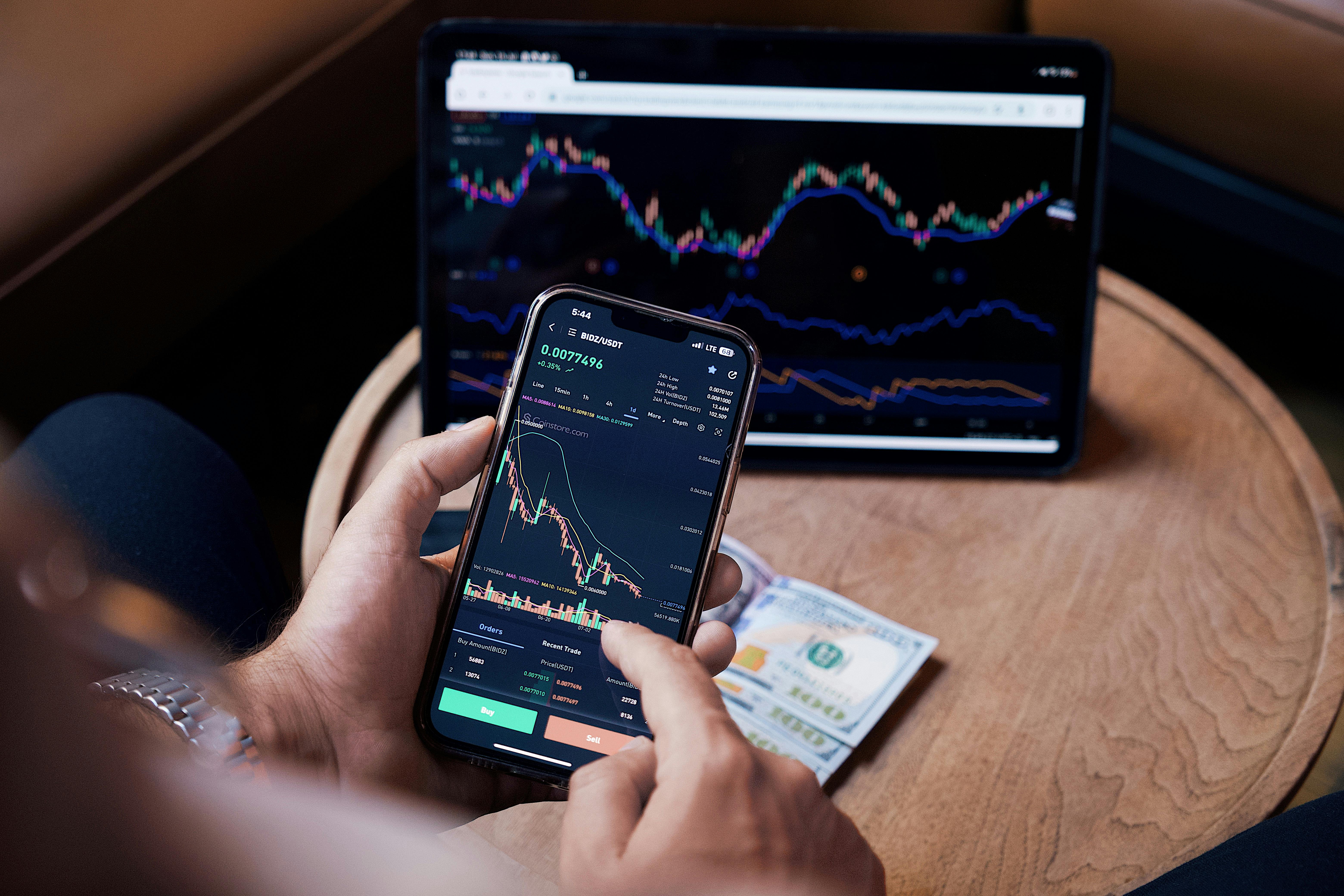
Navigate the cutting-edge of automated investing with our 2026 guide to AI-driven algorithmic trading platforms. Discover how machine learning is revolutionizing stock market strategies, compare the best AI trading software, and find the perfect solution to maximize your investment returns and optimize portfolio management.
Introduction to the Topic: The AI Revolution in Your Portfolio
Welcome to 2026, where the financial markets are no longer just human vs. human; they're human augmented by incredibly powerful artificial intelligence. The once exclusive domain of institutional investors, AI-driven algorithmic trading has democratized, placing sophisticated analytical power directly into the hands of individual investors and retail traders. If you're looking to gain a significant edge in today's volatile yet opportunity-rich stock market, understanding and utilizing these advanced platforms is no longer an option – it's a necessity. This comprehensive guide from trackcash360.com will explore the transformative impact of AI on investment strategies, compare the leading platforms available in 2026, and empower you to choose the best automated investing solution to conquer your financial goals.
The promise is compelling: faster execution, emotion-free decision-making, vast data analysis capabilities, and the potential for consistent, optimized returns. But with a rapidly expanding market of AI trading platforms, how do you differentiate between true innovation and mere hype? Our in-depth analysis cuts through the noise, providing you with the critical insights needed to make informed purchasing decisions and secure your financial future.
Backgrounds & Facts: The Evolution of Automated Investing
Algorithmic trading has been a cornerstone of institutional finance for decades, executing trades at speeds impossible for humans. However, the integration of Artificial Intelligence, particularly Machine Learning (ML) and Deep Learning (DL), has supercharged these algorithms. Traditional algorithms followed predefined rules; AI-powered systems learn, adapt, and predict. By 2026, this evolution has brought forth platforms capable of:
- Real-time Market Sentiment Analysis: Scouring news feeds, social media, and financial reports to gauge market mood and predict price movements.
- Advanced Predictive Modeling: Identifying complex patterns in historical data to forecast future price trends with greater accuracy than ever before.
- Dynamic Risk Management: Adjusting portfolio allocations and trade sizes in real-time based on market volatility and predefined risk parameters.
- Optimized Execution Strategies: Minimizing slippage and maximizing fill rates by intelligently routing orders across multiple exchanges.
- Automated Backtesting and Optimization: Rapidly testing thousands of strategies against decades of market data to find the most robust and profitable approaches.
The market for AI in financial services is projected to reach staggering figures by the mid-2020s, with a significant portion dedicated to investment management and trading. What was once the preserve of quantitative hedge funds is now accessible to individuals through user-friendly interfaces and competitive subscription models. This democratization is fueled by advancements in cloud computing, big data analytics, and more sophisticated, yet accessible, AI models. For investors seeking to navigate the complexities of the 2026 stock market, these tools offer an unparalleled advantage, transforming speculative trading into data-driven decision-making.
Expert Opinion / Analysis: Navigating the AI Frontier
Leading financial technologists and market strategists agree: AI is not just a tool; it's the future operating system of the stock market. Dr. Anya Sharma, a renowned FinTech analyst, recently stated, "By 2026, investors who aren't leveraging AI are essentially bringing a knife to a gunfight. The speed, data processing capabilities, and emotional detachment of AI algorithms provide an undeniable edge. However, it's crucial to remember that AI is a co-pilot, not an autopilot. Human oversight, understanding the algorithm's limitations, and continuous learning remain paramount."
While the benefits are immense, it's important to approach AI trading platforms with a balanced perspective. Key considerations include:
- Data Quality and Bias: The effectiveness of AI is directly tied to the quality and impartiality of the data it's trained on. Biased data can lead to flawed trading decisions.
- Black Box Problem: Some advanced AI models can be opaque, making it difficult to understand why a particular trade was executed. This lack of interpretability can be a concern for risk management.
- Market Shifts: While AI adapts, unprecedented 'black swan' events or fundamental market structure changes can challenge even the most sophisticated algorithms.
- Over-optimization: Strategies that perform exceptionally well in backtesting might fail in live markets if they are over-optimized to historical data, failing to generalize to new conditions.
Our analysis suggests that the most successful investors in 2026 will be those who integrate AI tools intelligently, using them to enhance their research, identify opportunities, and manage risk, rather than blindly entrusting their entire portfolio to a machine. The goal is to augment human intelligence, not replace it, ensuring a robust and adaptive investment strategy.
💰 Best Options in Comparison (VERY IMPORTANT): Top AI-Driven Trading Platforms of 2026
Choosing the right AI algorithmic trading platform can be a game-changer for your portfolio. We've rigorously evaluated the leading options available in 2026, focusing on features, performance, pricing, and suitability for different investor profiles. Here are our top recommendations:
-
QuantFlow AI: The Institutional-Grade Powerhouse
Primary Focus: High-frequency trading, advanced quantitative strategies, deep market insights for serious retail investors and small funds.
Key AI Features: Utilizes proprietary deep learning models for ultra-low latency execution, real-time news sentiment analysis, and dynamic portfolio rebalancing. Offers highly customizable strategy builders and a robust backtesting environment. Connects directly to major institutional liquidity providers.
Pricing Model: Tiered subscription starting at $299/month, with performance fees (0.5% - 1.5%) on profits above a certain threshold. Enterprise solutions available.
Ideal User: Experienced traders, quantitative enthusiasts, and investors seeking institutional-level tools and willing to manage complex strategies. Requires a significant understanding of market dynamics. -
AlgoWealth Pro: Smart Automation for Diversified Growth
Primary Focus: User-friendly, long-term wealth accumulation through diversified, risk-adjusted automated portfolios.
Key AI Features: Adaptive learning algorithms that optimize asset allocation based on global economic indicators, market trends, and individual risk tolerance. Includes automated tax-loss harvesting and seamless integration with popular brokerage accounts. Features a 'Predictive Rebalance' engine that anticipates market shifts.
Pricing Model: AUM-based fees (0.25% - 0.75% annually) or a flat monthly subscription for advanced features ($99/month). Free tier for portfolios under $5,000.
Ideal User: Growth-oriented investors, busy professionals, and those new to automated investing who prioritize diversification, ease of use, and steady long-term returns over high-frequency trading. -
SynapseTrade: Niche Market Alpha Generator
Primary Focus: Specialization in specific high-growth sectors (e.g., AI & Robotics, Green Energy, Biotech) or alternative assets like digital commodities/DeFi integration.
Key AI Features: Employs specialized neural networks trained on sector-specific data, event-driven predictive analytics (e.g., earnings reports, clinical trial outcomes), and advanced pattern recognition tailored to niche market inefficiencies. Offers robust API access for custom integrations.
Pricing Model: Modular pricing; base subscription at $149/month, with add-on 'strategy packs' for specific sectors ($49-$99/month per pack). Performance fees for certain high-alpha strategies.
Ideal User: Investors with a strong conviction in specific market segments, those seeking targeted alpha, or users comfortable with managing specialized, potentially higher-risk portfolios. Requires some domain knowledge. -
EchoInvest AI: The Accessible Entry Point
Primary Focus: Budget-friendly, simplified automated investing for beginners and small portfolios.
Key AI Features: Offers a selection of pre-built, easy-to-understand AI-driven strategies (e.g., trend following, mean reversion, simple momentum). Includes intuitive risk management sliders and educational resources to help new investors understand automated trading basics. Limited customization.
Pricing Model: Low monthly fee of $29.99, or a freemium model with basic features free and advanced capabilities unlocked via subscription.
Ideal User: New investors, students, or those with smaller capital looking to dip their toes into AI-driven trading without a significant upfront investment or steep learning curve. Excellent for building confidence in automated systems.
Comparison Table: AI Trading Platforms 2026
| Platform Name | Primary Focus | Key AI Features | Pricing Model | Ideal User | Pros | Cons |
|---|---|---|---|---|---|---|
| QuantFlow AI | High-Frequency & Quantitative Strategies | Deep Learning for low-latency execution, real-time sentiment, customizable strategy builders. | Tiered subscription ($299+/month) + performance fees. | Experienced traders, quant enthusiasts, small funds. | Institutional-grade power, superior speed, deep analytics. | High entry barrier, complex, higher cost. |
| AlgoWealth Pro | Diversified Long-Term Growth | Adaptive learning for asset allocation, Predictive Rebalance, automated tax-loss harvesting. | AUM-based (0.25%-0.75% annually) or flat monthly ($99/month). | Growth investors, busy professionals, beginners seeking diversification. | User-friendly, diversified, steady returns, good for beginners. | Less customization for advanced users, AUM fees can grow. |
| SynapseTrade | Niche Sector & Alternative Assets | Sector-specific neural networks, event-driven analytics, advanced pattern recognition. | Modular pricing ($149+/month + strategy packs). | Niche market investors, those seeking targeted alpha, advanced users. | Highly specialized, potentially higher alpha in niches, robust API. | Limited diversification, higher risk in niche markets, requires domain knowledge. |
| EchoInvest AI | Accessible Entry-Level Automation | Pre-built strategies, intuitive risk sliders, educational resources. | Low monthly fee ($29.99) or freemium. | New investors, students, small portfolios, those testing AI. | Affordable, accessible, simple to use, good starting point. | Less powerful, fewer features, limited customization. |
Outlook & Trends: The Future of Your Automated Portfolio
Looking beyond 2026, the trajectory of AI in financial markets points towards even greater sophistication and integration. We anticipate several key trends shaping the landscape:
- Hyper-Personalized AI Advisors: Expect platforms to evolve into hyper-personalized financial co-pilots, dynamically adjusting strategies not just based on market data, but also on your lifestyle changes, career trajectory, and even psychological profiles, using advanced behavioral economics AI.
- Explainable AI (XAI): Addressing the 'black box' problem, future platforms will incorporate XAI, providing transparent insights into why specific trades were executed or why certain portfolio adjustments were made, fostering greater trust and control.
- Quantum Computing Integration: While still nascent, quantum computing holds the promise of processing market data at speeds and complexities unimaginable today, potentially unlocking entirely new classes of trading strategies and risk models.
- Web3 and Decentralized Finance (DeFi) Synergy: AI platforms will increasingly integrate with decentralized exchanges and DeFi protocols, offering automated strategies for yield farming, liquidity provision, and arbitrage across traditional and crypto markets.
- Enhanced Regulatory Frameworks: As AI becomes more ubiquitous, regulatory bodies will likely introduce more stringent guidelines for transparency, fairness, and accountability in algorithmic trading, ensuring investor protection.
These trends suggest a future where AI not only automates but intelligently anticipates and adapts, making investing more efficient, accessible, and potentially more profitable for everyone. Staying abreast of these developments will be crucial for maintaining your competitive edge.
Conclusion: Your Next Step Towards Automated Financial Success
The year 2026 marks a pivotal moment in investment history, where AI-driven algorithmic trading platforms are no longer a luxury but a powerful tool for serious investors. From institutional-grade powerhouses like QuantFlow AI to accessible entry points like EchoInvest AI, the market offers a diverse range of solutions tailored to every investor's needs and risk tolerance.
Embracing these technologies means leveraging unparalleled data analysis, lightning-fast execution, and emotion-free decision-making to optimize your portfolio and unlock new levels of profitability. However, remember the importance of due diligence: understand the platform's methodology, match it to your investment goals, and always maintain an element of human oversight. The journey to automated financial success begins with informed choices.
Ready to transform your investment strategy? Explore the options we've highlighted, visit their official websites for detailed demos, and take the first step towards a smarter, more profitable future with AI. The market waits for no one – let AI help you conquer it.